A rubber track assembly operates in an environment filled with abrasive particles, moisture, changing temperatures, and mechanical loads. Its service life depends partly on manufacturing quality, but owner behavior also plays a considerable role.
Many avoidable problems begin with ordinary operating habits rather than dramatic equipment failures. Owners can protect their investment in UTV tracks by recognizing these seven common mistakes.
1 : Treating Pavement Like an Off-Road Trail
Crossing a paved road is different from traveling along one for several miles. Extended operation on hard, abrasive surfaces increases rubber wear. Owners should minimize unnecessary pavement and gravel travel, particularly when alternative routes are available.
2 : Assuming Tighter Tracks Perform Better
Excessive tension is not an improvement over correct tension. Overtightening can increase resistance and place additional loads on supporting components. Insufficient tension can also create operational problems.
UTV track systems should be adjusted according to the manufacturer’s specified procedure. Visual judgment alone is not a dependable substitute for proper measurement.
3 : Ignoring Material Trapped Inside the Assembly
Mud, vegetation, stones, and frozen debris can accumulate around supporting wheels and other components. Inspect the assemblies following demanding journeys and remove trapped material using appropriate cleaning methods. Never attempt to clear debris while the track system is moving.
4 : Maintaining Tire-Based Driving Speeds
A tracked vehicle has different mechanical and operating characteristics. Attempting to maintain conventional tire speeds over long distances can increase heat, fuel consumption, and component stress.
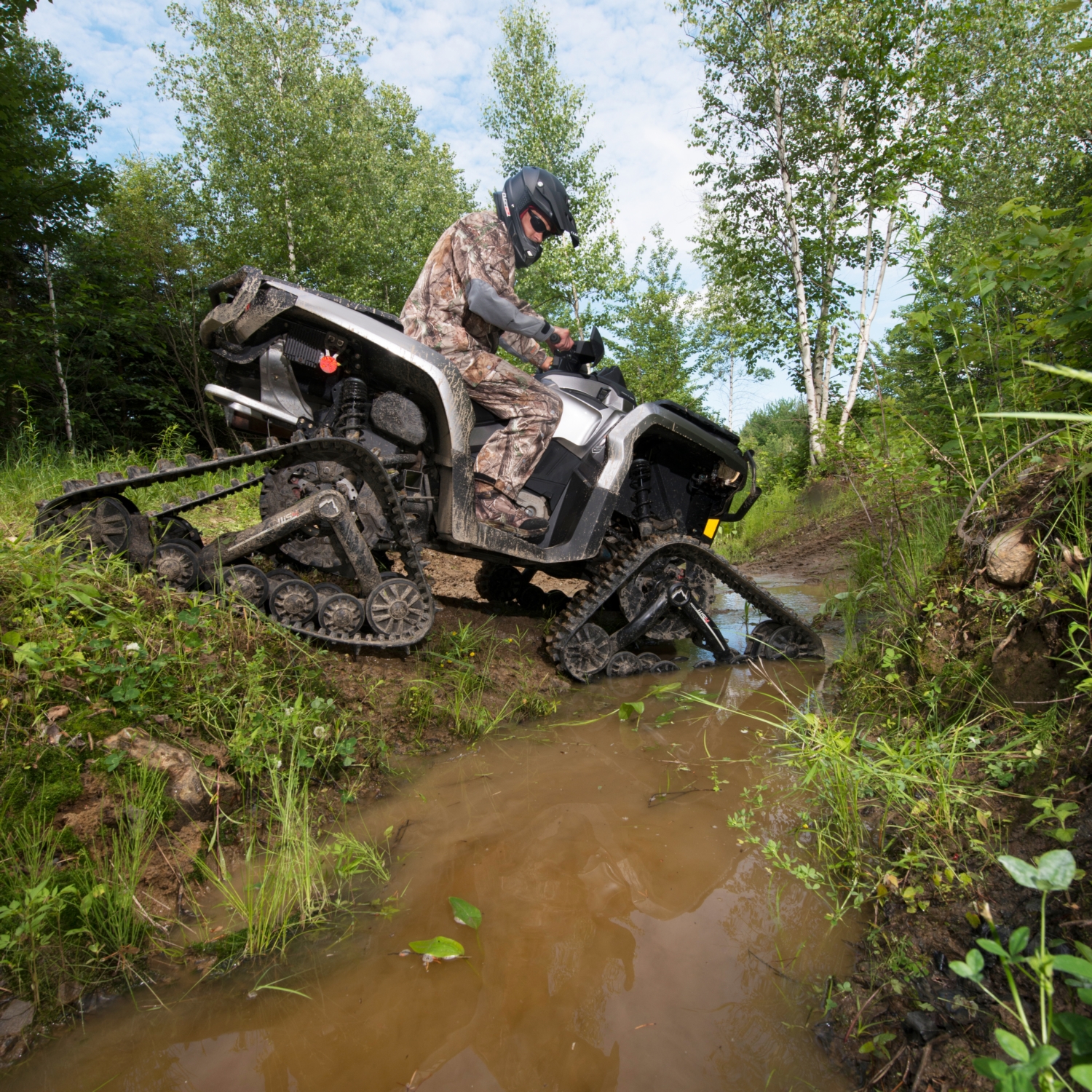
Manufacturers publish speed guidance for their equipment, and owners should also consider vehicle-specific operating restrictions. Selecting tracks for UTVs requires accepting that improved access often comes with slower travel.
5 : Overlooking Mounting Hardware
Track assemblies experience substantial forces during operation, especially across uneven terrain. Loose mounting components can affect alignment and create additional wear. Periodic hardware inspections should follow the manufacturer’s service schedule and torque specifications. New installations may require particular attention during their initial operating period.
6 : Forgetting About the Vehicle Itself
Installing side by side tracks does not eliminate ordinary UTV maintenance. Engine oil, cooling systems, drivetrain fluids, belts, and suspension components remain essential to reliable operation.
Additional resistance can make neglected vehicle maintenance more consequential. Owners should consult their vehicle manufacturer regarding track-related service requirements and approved operating practices.
7 : Storing Equipment Without Preparation
Seasonal removal provides an opportunity to inspect the assemblies thoroughly. Cleaning, drying, and checking components before storage can reveal developing problems while there is still time to obtain replacement parts. Store equipment according to manufacturer recommendations and keep mounting hardware organized.
Make Maintenance Part of Ownership
ATVtracks.net supplies Camso and Kimpex equipment and provides guidance informed by more than two decades of industry experience.
Owners should establish a maintenance routine based on their particular system and operating environment rather than waiting for unusual noises or visible damage.
Side by side track systems represent a significant investment. Consistent inspection and sensible driving can help preserve that investment while reducing the likelihood of interruptions during demanding operating seasons.